Images or animation not showing? View in browser
| |||||||||||||||
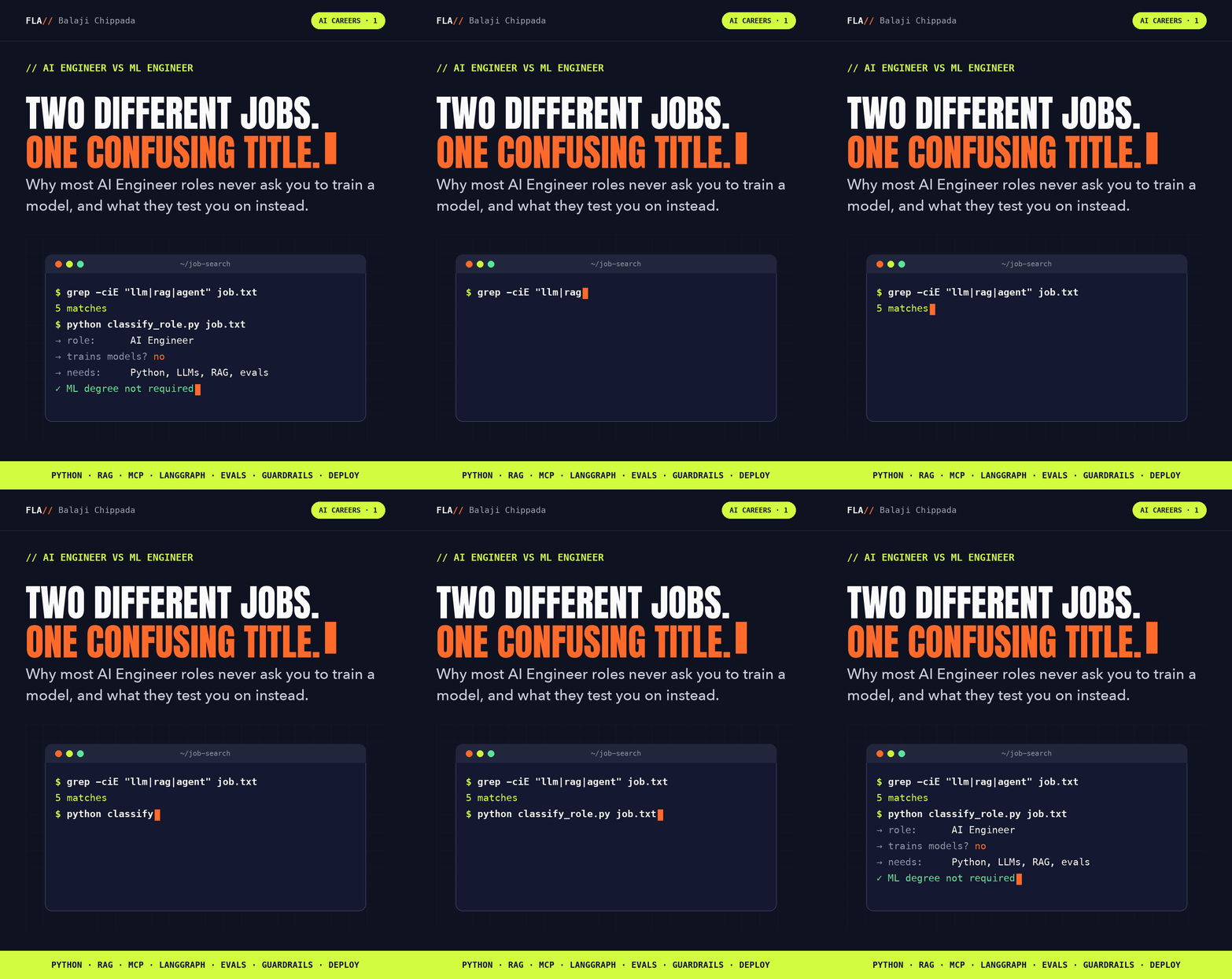
Hi {{ name }}, “I am in confusion, some people say ML is required for AI engineering.” I’ve received some version of that message more times than I can count this year. So here’s the short answer, side by side. | |||||||||||||||
| |||||||||||||||
Many job posts still say “AI/ML” because they were copied from older templates. Read the responsibilities and ignore the title. If the work is LLMs, RAG, agents and evaluation, it’s an AI Engineering role, and you won’t be quizzed on backpropagation. | |||||||||||||||
| |||||||||||||||
AI Engineering is where most of the new roles are being created right now. It’s open to anyone who can write good Python and think like an engineer, whether you’re in college or 15 years into your career. If you want to see the full path, from your first line of Python to a deployed multi-agent system, I walk through it in this video. | |||||||||||||||
P.S. Next email: the five things AI Engineers actually build at work, with real examples. | |||||||||||||||
|
Build it. Don’t just watch it.
You’re receiving this because you signed up for updates from The Agent Engineer.
Manage preferences or unsubscribe |