Images or animation not showing? View in browser
| ||||||||||
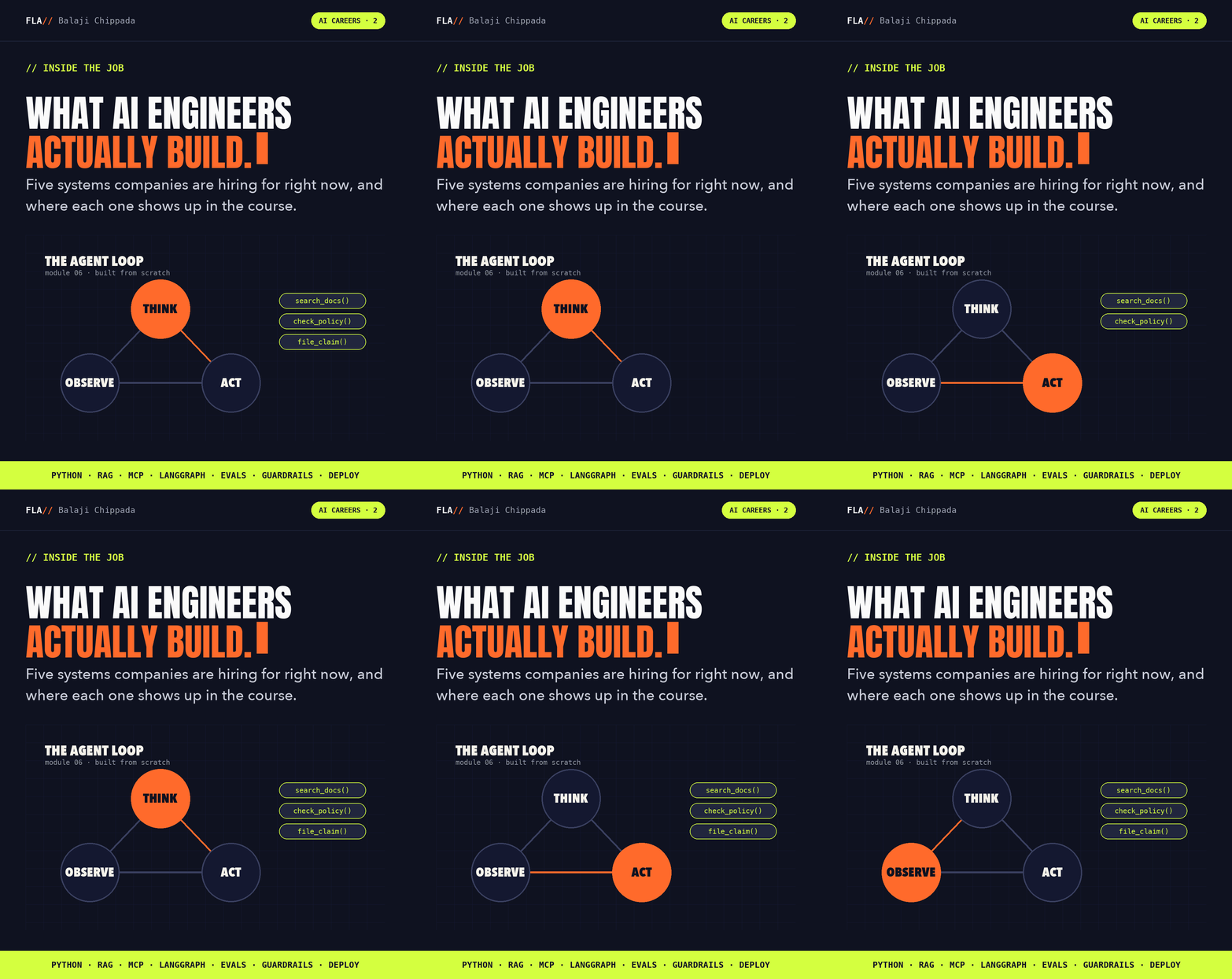
Hi {{ name }}, A student asked me last month: “As an AI engineer, do we just build things like ChatGPT for companies?” Fair question. Companies already have the models. What they need is someone who can make a model work on their data, follow their rules, and keep working on a busy Monday morning. That work usually looks like one of these five. | ||||||||||
| ||||||||||
That fifth one is what most tutorials skip, and it’s what interviewers ask about most. Getting a demo working is easy. The engineer who can measure why it fails and fix it is the one who gets hired. In the course you build all five as one product that grows module by module: 15 module projects that build on each other, then 5 capstones. Want to see what a lesson looks like? Here’s a real coding lesson from inside the course. | ||||||||||
P.S. I build everything from scratch first (a mini LangChain, hand-written tools, an MCP server) before using frameworks. That’s why students can explain their projects in interviews. | ||||||||||
|
Build it. Don’t just watch it.
You’re receiving this because you signed up for updates from The Agent Engineer.
Manage preferences or unsubscribe |